Spring bulbs in autumn, in order of flowering
You can still plant tulips in November, and in a mild autumn even in December. A long spring display, though, depends not on timing but on order: if early, mid-season and late bulbs share a bed, something is always in flower in it from February to May.

In autumn it is easy to drop a bag of tulip bulbs into the basket at the garden centre. In spring you then enjoy them for two weeks, and before and after that you look at bare soil or yellowing leaves. In an average year, one kind of bulb flowers for about two weeks.
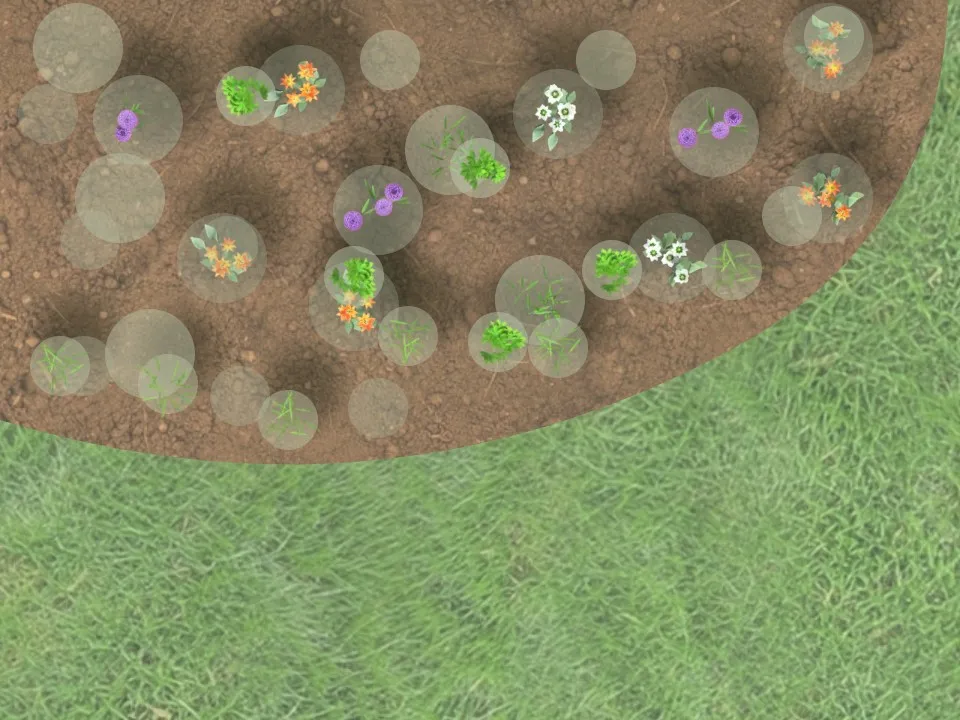
If you think in three waves instead, early, mid-season and late bulbs, the same bed stays colourful from late February to late May. The bed below is 1.6 metres long and at most 80 cm deep, in a small front garden beside the path to the front door. It holds nine kinds of bulb, three to a wave.
Early wave (February–March)
These open first, often on frosty mornings. They are low, 10–15 cm tall, so they can go at the front of the bed and above the later bulbs as well.
- Galanthus nivalis (common snowdrop): white, nodding flowers, among the earliest of all.
- Eranthis hyemalis (winter aconite): a yellow, buttercup-like flower with a green ruff of leaves.
- Crocus tommasinianus (early crocus): a slender, pale lilac flower that spreads by itself year after year.
Mid-season wave (March–April)
- Narcissus 'Jetfire' (daffodil): a low, early daffodil, yellow with swept-back petals and an orange trumpet. It is already in flower by mid-March, so it links the first and second waves.
- Narcissus 'Thalia' (daffodil): pure white and scented, with several flowers to a stem. It flowers in April.
- Muscari armeniacum (grape hyacinth): dense blue spikes in April. It runs along the front of the bed as a blue ribbon.
Late wave (May)
- Tulipa 'Ballerina' (tulip): an orange, lily-flowered late tulip.
- Tulipa 'Spring Green' (tulip): a green stripe runs down its white petals, and it flowers in May too.
- Allium 'Purple Sensation' (ornamental onion): purple globes 80–90 cm up, from May to early June. Bees visit it readily too.
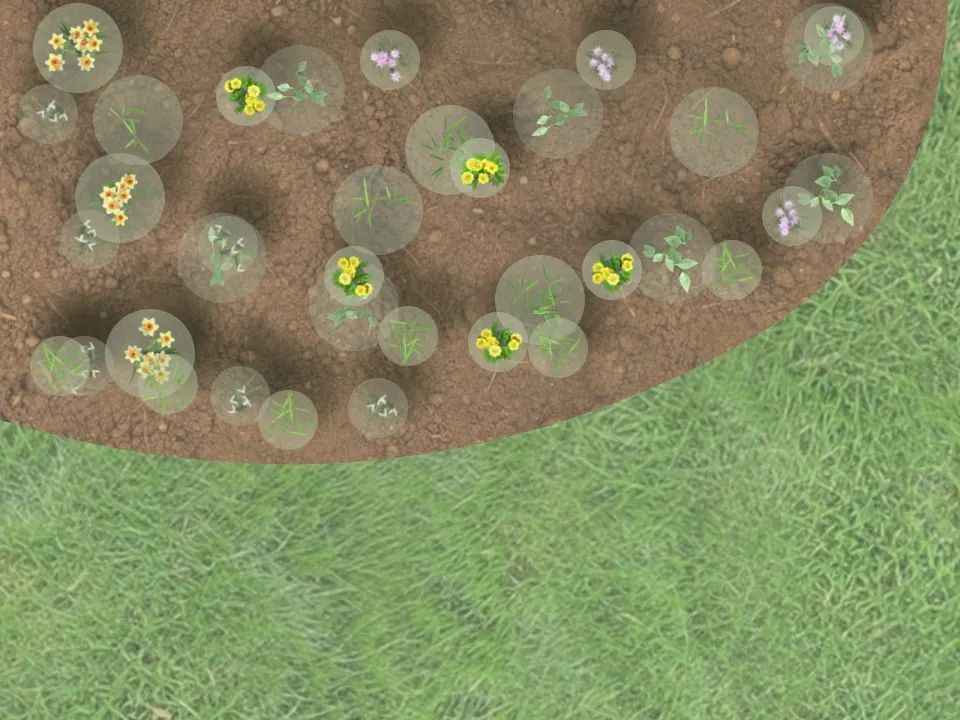
- March · mid-March, the first wave
- May · mid-May, the third wave
Tap a picture to view it full size.
The same spot, in layers
In a small bed the waves do not fit side by side, so they partly go on top of each other. The tulips and alliums go deepest, and above them, shallower, the crocuses, snowdrops and winter aconites. In March the top layer flowers, in May the bottom one. The two do not get in each other's way: the early bulbs' leaves are narrow and low, the tulips grow through them easily, and by early summer they have died back.
Daffodils are the exception. Their leaves stay green for weeks after flowering, and if they sit above the tulips, the tired leaves spoil the tulips' display too. So in this bed the daffodils stand in patches of their own, beside the tulips, not over them. The grape hyacinths went right at the front: they are low and put up new leaves as early as autumn, so even in winter you can see where the bulbs are.
Instead of straight rows and neat circles, scatter the bulbs on the ground and plant them where they fall. That way the patch looks natural. And always plant enough of one kind for it to read as a patch, not as dots.
When and how deep
- September and October: the time for snowdrops, winter aconites, crocuses, daffodils, grape hyacinths and alliums. Ideally they root before the frosts. If you have missed it, plant them in November too, as long as the ground has not frozen: a bulb left in its bag will certainly not flower.
- From mid-October tulips are best planted last, because in warm soil they are more easily attacked by fungal diseases. It is worth finishing by the end of November, because after that the ground can freeze at any time. In a mild autumn December still works.
- Depth: two to three times the bulb's own height. So a 5 cm tulip bulb goes 10–15 cm deep, and a 2 cm crocus about 5 cm deep.
- Spacing: leave at least twice the bulb's width between two bulbs. Small bulbs can go close together, as long as they do not touch.
- Which way up: pointed end up. With the wrinkled tubers of winter aconite the direction does not matter, but soak them in lukewarm water for a few hours before planting and set them 5 cm deep.
In a Hungarian garden
Because of the soil and the weather here, a few things deserve extra attention.
- Chalky, alkaline garden soil suits most spring bulbs. The bigger problem is standing water: if the soil stays waterlogged for long in winter, the bulbs rot easily. In that case raise the bed slightly, or improve the structure of the whole planting area; sand or gravel scattered at the bottom of the planting hole does not solve the problem on its own.
- There can be long dry spells in winter too. If the autumn is dry, water the bed thoroughly after planting so that the bulbs can put down roots.
- Where voles are common, plant tulips and crocuses in planting baskets. Daffodils and alliums are usually less to their taste.
After flowering
Let the leaves turn yellow on their own: the bulb uses them to gather strength for next spring. Snap off the tulips' faded flowers so that they do not set seed. The dry seed heads of alliums look good too, and can stay in the bed.
Choosing by month
In autumn, over bare soil, it is hard to picture how the bed will come together in spring. We planned this bed in Seasonry. One of Seasonry's core ideas is that you can plan a garden at its true scale: on the plan every patch of bulbs sits in its own place, so you can see what goes side by side and what goes on top.
You can choose by month in the plant catalogue: with “Bulbs” ticked under “Type” and a month ticked under “Bloom”, the list shows only the bulbs that flower in that month. This is included in the free plan too.
Which month stays empty in the finished bed is shown month by month in the “Bloom calendar”, and the Guide's lesson explains it in detail. The two top-down pictures above come from the plan too: “Live season” shows the bed as it stands in a chosen month. Both are available with a Seasonry+ subscription.
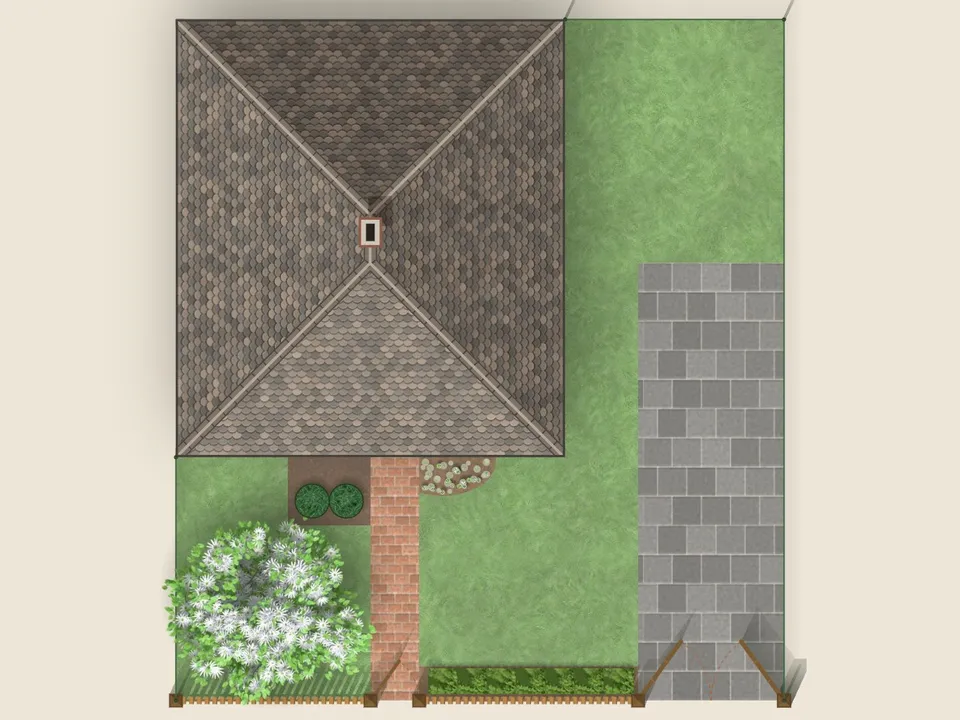
The garden for this article
A bulb bed by the front door
12.5 × 14 m · 12 species · 10 plants and 36 bulb patches
A Seasonry file you can import into your own account.
You can edit and download it on a computer.